

Send Help
Sam Raimi's b-movie confection is a nice treat, but rather disposable
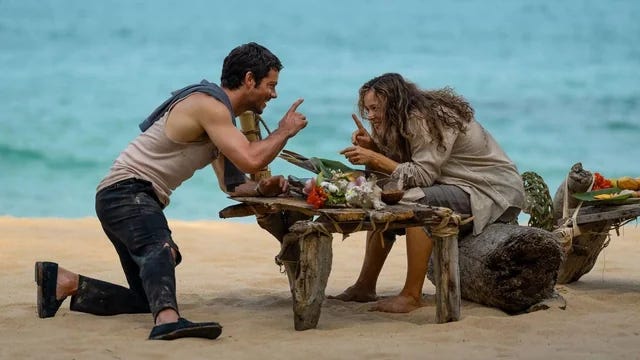
Sam Raimi is the kind of studio director that they’ve stopped propping up in recent years. There’s something distinctly ‘90s and early ‘00s about his filmmaking that gets me in the millenial nostalgia zone, irrespective of the quality of his films. To this day, I more or less think of him as the Spider-Man guy, and though I haven’t seen a comic book movie since Age of Ultron, he represents a quaint time when studios were still figuring out how much money was in these IPs and were putting in conisderable effort to create and reach the audiences for these productions. And it worked – teenage me, as yet blissfully undifferentiated from the general audience, was positively delighted at those early superhero flicks. On a content level they were entertaining, and on a technical level they were impressive. So a certain rosy view of the past acted as a tailwind pushing me into the cinema to see Raimi’s latest, Send Help. (Well that, and the fact that I hadn’t seen Rachel McAdams in anything in forever, and I’ve been a diehard fan of hers since Aloha.) I came out with mixed feelings on the project, which certainly had its virtues, but ultimately didn’t turn out to be more than a fairly well-executed b-movie, trading on the simple pleasures of sweet revenge and campy grotesquerie.
The set-up is simple and formualic: we are introduced to Linda Little, a corporate strategist played to the key of “frumpy” by Rachel McAdams, as she grapples with being passed over for a promotion by the heir to her company, Bradley, played to the key of “arrogant” by Dylan O’Brien. The common grievances of corporate life are all condensed into this situation: Bradley is shallow, douchey, elevates his golf buddies and frat bros over the capable and intelligent Linda mostly for superficial reasons, dressed up as wanting her to be more of a “people person” to suit the executive role she’s eyeing. Whereas Linda is your typical pushover, stammering, inelegant – in a word, lame. The power dynamic is pushed toward extremity as the film plays up Bradley’s cruelty to Linda as much as it plays up Linda’s haplessness and lack of self-confidence. Then, on a trip to Thailand, the private plane crashes and wouldn’t you know it, the only survivors on a remote, uninhabited island are none other than Linda and Bradley. Oh, by the way, the film rests on an inexplicably perfect coincidence (read: eye-rolling contrivance): Linda happens to be a survival nut, which we learn from a Survivor audition tape that Bradley and his boys’ club fish out of the ether to mock Linda with. And so the stage is set for a perfect reversal-of-fortunes flick with a side order of gratuitous gore and gradual psychotic breakdowns.
Admittedly, I wonder if I would have accepted the premise of the film more easily if I hadn’t been tempted to watch the trailer before watching the film. The island plane crash might have been intended to operate as some sort of “twist,” although it’s hard to see where else the film might’ve been going just from the opening scenes. I get the sense that the filmmakers weren’t too fussed about the departure so long as we got to embark upon the journey, which is partially true. There is a fundamental, atavistic pleasure in sweet revenge that I can’t pretend to be immune to, and it’s fairly delicious to see Bradley continually humiliated by Linda as they carve out an existence on the island while waiting to be rescued. And the concept actually has some legs as Raimi is able to spin out a couple of different variations on a theme, encompassing all the major developments that could happen in this scenario. The core foundation that the film returns to is that Linda is keeping Bradley alive not out of some humanitarian, moral reason, but because she rather likes dominating him and wants their dynamic on the island to continue indefinitely. Far from being purely sympathetic, we gradually come to see Linda’s character as a bit touched in the head, with a sad backstory that ends up making her feel genuinely dangerous.
But this doesn’t have the effect of shifting sympathy onto Bradley, who remains the punching bag throughout the film. His whiny attempts at independence, which all inevitably fail, eventually build up to a false truce that breaks down into a pathetic attempt at betrayal. Said betrayal’s failure also occasions an appropriately over-the-top scene of repeated projectile vomiting onto Bradley’s face, at which point the film finally drops all cover of being a respectable movie about an odd-couple on an island and becomes a vehicle for increasingly outrageous happenings that don’t even feint toward believability. By the time Bradley’s fiancee finds the island and is pushed to her death by Linda in an effort to preserve the status quo, the film’s real intention to be a pure revenge-and-conquest fantasy is laid bare, so much so that the inexplicable plot convenience of Bradley finding the fiancees diamond ring on the beach is almost an afterthought so long as it justifies going into the cat-and-mouse cross-island chase that’s been teased by implication through the length of the movie.
The ending is really a punchline, and a decently funny one. Turns out, the island wasn’t uninhabited after all, and the knife that Linda had hand-waved away as having washed up on the beach (an excuse that, cleverly enough, we in the audience were also inclined to accept) turned out to have been taken from the house. Bradley, in a rage over the killing of his fiancee, chases her all the way to the house, only to be taken out by her in a typically clever way, and we see an epilogue of her being rich, famous, and totally transformed from the awkward woman she was at the outset. For what it is, Send Help is pretty much perfect – it does its job – and though I was relatively charmed by its sincerity? Or naievety, almost? It rolled out of my head pretty much immediately after leaving the theatre.