

Silent Friend
Ildikó Enyedi’s ambitious meditation on the mystery of humanity's connection with nature is a touch meandering, but impresses with its spiritual and conceptual depth
Early on in Ildikó Enyedi’s Silent Friend, the neurologist Dr. Wong (played by Tony Leung) delivers a lecture on the subject of the differences between the ways adult and child minds focus their attentions. The subject is explained with a visual aid: for the adult mind, we are shown a single “spotlight” that blocks out everything besides what it is currently concentrated upon; for the child mind, we are shown a glowing bouncy beachball that gets passed around the class, demonstrating the free-floating, somewhat random, and wide-ranging nature of the infant consciousness.
Dr. Wong is at Marburg University in Germany to conduct research on this topic, and has before him an intractable research problem in obtaining interpretable data about his infant subjects, owing to the difficulty of communicating with pre-verbal subjects. In demonstration of his method of research, we are shown what I assume are visual representations of neurological activity in the form of coloured waveforms, which inevitably take on a psychedelic dimension that reminds one of some classic adventures in experimental filmmaking. He is cut off from furthering his research, however, by the untimely breakout of the COVID-19 pandemic. As a Hong Kong citizen, he is presumably unable to leave his residence at the university during this time. But the film never intended to follow the line of his research as a narrative thread. What follows instead is a diffuse, stream-of-consciousness (pardon the buzzword, but it really is apt) meditation on the connections that living beings seek to create and to understand, with a particular focus on the idea of plant consciousness.
This is quite a long film, and I confess that I wasn’t always hyper-engaged with it; the whole thing felt a bit like a dream, an effect heightened by its complex structure that has us jumping across 3 different timelines in the same setting, with separate narratives for each timeline and no obvious connection between them. It reminded me more than a little of my experience with Pierre Créton’s documentary 7 Walks With Mark Brown, and not just for its botanical bent. The sensory experience felt prioritized over any progressive sequencing of events or scenes, and the film as a whole relies upon conceptual elements to ultimately cohere. Every time we jump from one storyline to the other, it feels like Enyedi is purposefully obstructing our tendency to form a singular plane of focus.
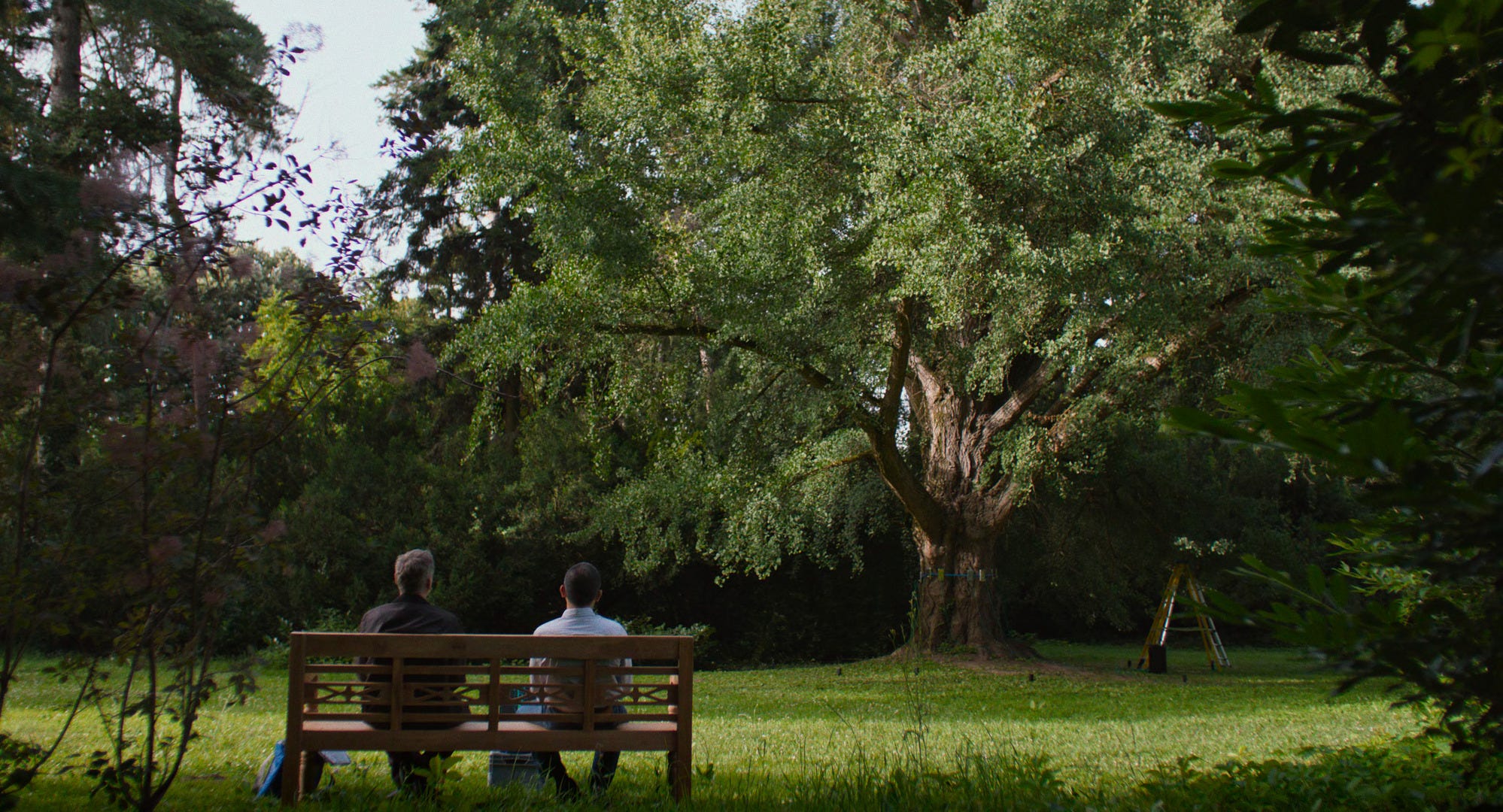
This structural and formal approach is likely intended as a mimetic rendering of the infant consciousness as described by Dr. Wong in his lecture: nothing is excised or left out for the sake of a sharper focus, so even if you follow each timeline thread, the scenes all feel like independent slices-of-life even if there are narrative linkages in hindsight. Untethered to narrative stakes, Enyedi instead floats from time to time, always returning to the same motifs in the plants and in the technology that people use to observe them, establishing these elements as the true centre of the film. Or perhaps there is no true “centre,” and we are being encouraged to experience each image independently. Coupled with the gorgeous cinematography by Gergely Pálos, I gradually came to accept the experience as a pseudo-documentary of the environs of Marburg University and its botanical facilities, with a starring role for the immense, ancient gingko tree that Dr. Wong comes to obsess over during his quarantine.
That’s not to say that the 3 little mini-stories were without their own dramatic intrigue. In fact, they all sound a little more eventful on paper than they were on screen. In our main timeline, after quarantine, Dr. Wong (under advisement by one Dr. Sauvage, played by Lea Seydoux) ultimately switches gears to study the relation between his own neurological activity with that of the gingko tree, setting up transmitters all around the tree, the sci-fi look of which disturbs the groundskeeper who also lives in the university, so much so that the equipment is vandalized. In the black-and-white timeline, we follow Marburg’s first female student, Grete (Luna Wedler), as she obtains admission to the school after a sexist and vulgar examination by the chauvinistic senior faculty. Later on, she is kicked out of her rental home after attending what I interpreted as some sort of spiritualist group in the forest, and finds work with as an assistant to a photographer. And in a ‘70s timeline, we follow an introverted student called Hannes (Enzo Brumm) who develops a crush on a free-spirited botany student, Gundula (Marlene Burow), while hanging out in her garden and learning to help her tend to the plants.
Each of the stories are complete in their own way, and it’s hard to find links between any of them beside sharing the same locale. I’m not entirely sure if the film would function any differently if it were presented as just 3 anthology mid-length features, as the cross-cutting didn’t reveal much that wasn’t there already. But the characters in each are nicely sketched, with some similarity in the sense that a certain isolated quality follows each of the main characters, perhaps motivating each of them to pursue an enhanced connection with the nature around them. This isolated quality leads each character to some degree of conflict with his or her common fellow, but Enyedi’s gentle sensibility easily absorbs any hint of drama.
Two of the stories have happy endings: the doctor makes amends with the groundskeeper while Greta finds an opportunity to research and photograph in the East Indies. And in the third, Hannes’ unrequited love is made slightly humorous by the somewhat fantastic reaction of the experimental geranium. It seems that to Enyedi, these human foibles disappear beneath the gravity of life as a whole. After every scene of dialogue or exchange, she always finds a way to detour, to bring the film back to unfilled space or to standalone images of nature. This lends to the atmosphere of the film a certain spiritual quality somewhat hinted at in the title Silent Friend, with the incommunicable and the ineffable playing a large part in determining the emotional textures of the stories. The ending seems to bring this conceptual point home with a slow, immensely grand zoom-out on the ancient gingko, with no human present in the frame, with the filmmaker’s sincere reverence for life suffused within the image.