

The Currents
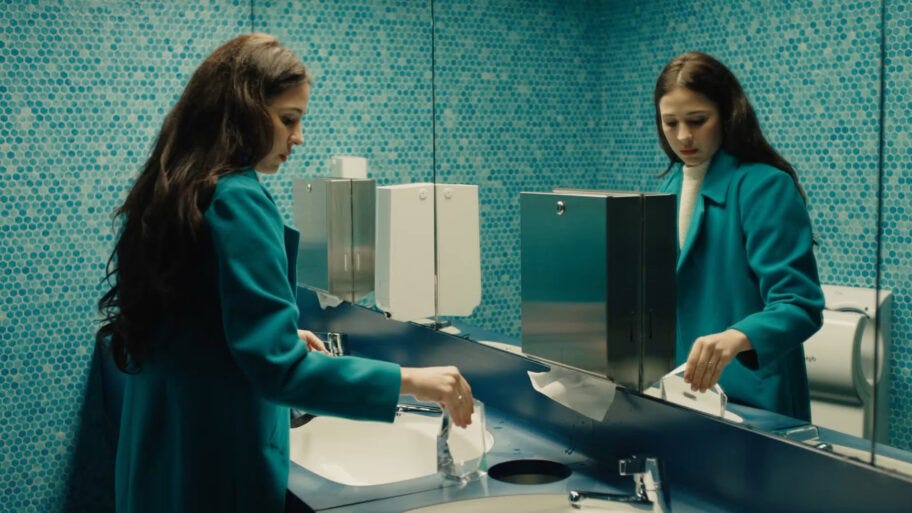
It’s always a bit of a bummer when you enjoy a film less the second time you watch it. I first saw The Currents – Milagros Mumenthaler’s third feature film – at AFI Fest in Los Angeles in October of last year. Having liked Mumenthaler’s previous film, 2016’s The Idea of Lake, I went into my first viewing of her latest film with high expectations. And during that viewing, the film lived up to those expectations. I was rapt by Mumenthaler’s ability to express the feeling of being swept away by ineffable forces that lead you to become alienated from your daily life. Mumenthaler’s at-times free-associative editing and unconventional use of non-diegetic sound effects conveyed the main character’s dissociation in a way I hadn’t seen before in film. But I found the ending somewhat disappointing and it made me question some of the film’s elements that I maybe didn’t pay as much attention to. So when the film was scheduled to open in Los Angeles this month at the Laemmle Royal, I eagerly anticipated my chance to see how a second viewing might further enhance my appreciation of the film and clear up a few of the reservations I had during my first viewing.
While I was still fully engaged by what Mumenthaler was doing on a sensorial level this time, the nagging issues I had with the ending expanded into larger concerns I developed with the film’s character work and structure. Mumenthaler establishes the main character of Lina (Isabel Aimé González-Sola) as a high-achieving fashion-designer who is married to Pedro (Esteban Bigliardi), a well-dressed handsome man who comes from wealth. They have a young daughter named Sofía (Emma Fayo Duarte) and Pedro’s mother (Claudia Sánchez) sometimes visits to do child-care duties or provide Lina with unsolicited advice. Both Lina and Pedro are busy with bustling professional lives, so sometimes Sofía has to accompany Lina to work and occupy herself by playing games on her iPad. Despite having many of the hallmarks of a fulfilling personal and professional life, Lina is caught in a malaise that makes her come off as aloof in her dealings with family and friends. Mumentahler doesn’t fashion a backstory to explain why Lina is going through these emotional struggles. While this ambiguity isn’t necessarily a flaw of the film, Mumenthaler fails to connect Lina’s internal conflict with a well-defined external drama that necessitates some kind of action on Lina’s part. Mumentahler powerfully evokes the social dynamics at play when Lina tries to mask her depression, but the film fails to make Lina’s withdrawn behavior dramatically compelling.
The film is structured around Lina’s fear of water, a thread that is established in scenes where she seems distressed about washing her hair or helping Sofía out of the bath. In the film’s first sequence, Lina receives an award at a fashion event and later that day jumps into a river in what appears to be a suicide attempt. Mumenthaler then cuts to Lina walking into her hotel lobby wearing a metallic space blanket. After Lina returns to Buenos Aires, she doesn’t bathe or wash her hair, which we later learn is due to the fear of water that she may or may not have had before the incident in Geneva. Lina’s hydrophobia feels like a conceptual element that the film doesn’t really develop into anything that collides with the direction the film takes. This issue is endemic to the film’s approach to character as a whole – we get a sense early on that Mumenthaler refuses to directly explain where these phobias and neuroses come from — which I am fine with, but because Mumentahler fails to complicate the elements of characterization that the film does introduce, we’re essentially left to fill in the gaps that the film leaves regarding Lina’s psychology and social world. This kind of imaginative gap-filling is not what I tend to look for in film and narrative art in general. Over the course of the film, Mumenthaler gives some clues as to what’s driving Lina’s psychological complex. For instance, in a scene late in the film where Lina visits her mother Nadia (Sara Bessio), we are led to suspect that some of Lina’s fears might have been influenced by her upbringing. All of Nadia’s furniture is wrapped in plastic and she refuses to come in contact with the delivery person who drops off her groceries. Later in the scene, Lina looks into her mother’s cupboard to see all the cans arranged neatly, leading her to swipe at the cans and knock some of them over. From these data points we can glean that Nadia might highly value things like hygiene, sanitization and orderliness. We might also speculate based on Lina’s gesture (which felt pretty contrived to me) that she might have some negative feelings about her mother’s emphasis on these values and those feelings might have impacted her hydrophobia. But this kind of speculation has little to do with what makes films enjoyable to me on a moment-by-moment basis. These hermeneutic clues just sit there, potentially adding to our understanding of the character’s background but not deepening the film’s drama in any substantial way.
Moreover, the film’s focus on the conceptual framework surrounding hydrophobia can sometimes take precedence to its attention to the details of interpersonal dynamics. An example of this tendency occurs when Lina goes to see an old friend named Amalia (Jazmín Carballo) whom she hasn’t met with in a while. Mumenthaler gives the impression that there is some kind of class dimension at play in this scene, with Lina coming from a lower socioeconomic status and rising up to a higher one through marriage and career success. Lina meets Amalia at the hair salon she works at and the shop looks a bit dingy, suggesting that Amalia is still of a lower socioeconomic class. Amalia initially displays an icy attitude toward Lina as it becomes clear that Lina has not kept in touch with her. As Lina tries to make some forced small talk, Amalia repeatedly asks what Lina wants from her in a somewhat hostile manner. Eventually we learn that Lina wants to receive sleeping gas in the back of the shop so that she can have her hair and body washed while she’s asleep, thus allowing her to avoid making waking contact with water. Mumenthaler cuts away from the initial interaction between the two women and then starts to show the images of Lina jumping into the river again. While those images are on screen, Lina tells Amalia about what was going through her mind when she was in the river. Mumenthaler doesn’t show what changed to produce a friendlier tone of conversation during this part of the scene. Nor does Mumenthaler give any indication of why Amalia went from being hostile to agreeing to a fairly strenuous (and as we later see, somewhat dangerous) procedure. What starts as a dramatically loaded scene between two friends who grew apart flattens into an expositional scene that reveals Lina’s thought process on the day of her jump into the river and sets up the plot point about Lina getting baths. Mumenthaler neglects tending to the kinds of details that would make Lina’s interactions with her social world more multifarious and instead focuses on the static mystery surrounding Lina’s fear of water.
Sometimes the film’s lack of willingness to deal in particulars can feel like an evasiveness that mirrors Lina’s desire to avoid confronting her problems. The film feels so burrowed into Lina’s subjectivity that we are sometimes deprived of an outside perspective on how her behavior affects her family and co-workers. If there is one character whose eyes we are allowed to see Lina through, it is Lina’s husband Pedro. Early on in the film, after Lina has started to grow distant after returning from Geneva, Pedro asks Lina some questions about her work tools she is using and she responds with terse descriptions. This scene successfully shows both the way Pedro asks some basic questions to feel connected to his withdrawn wife and the way it seems to take some effort for Lina to talk, possibly due to her depression. In another strong scene later in the film, Lina confronts Pedro for telling his mom about her emotional struggles. Prior to the scene, Pedro’s mother drops off some food that she says is healthier than what Lina, Sofía and Pedro usually eat. She references the mental problems that Lina is having and says that heating healthier will help her feel better. After returning to the apartment, Lina tells Pedro that she felt his mother tried to slight her by bringing the food, to which Pedro responds that his mother is trying to help. On the one hand, we get the sense that Lina is being a bit defensive about her mother-in-law identifying a potential shortcoming of Lina as a mother (an earlier scene shows Sofía talking to Lina about why she doesn’t cook like other moms). On the other hand, Lina probably has the right to feel that Pedro violated her privacy by telling his mom about issues that maybe Lina hasn’t even fully articulated to him. While this martial thread includes some strong textural moments like this, the general progression is of Lina retreating away from her family life as Pedro looks on dumb-founded until she eventually tries to escape, only to abruptly return. In an earlier scene, Pedro says that he feels Lina has been like a totally different person since returning from Geneva while they’re in bed. Lina responds by saying she’s still the same person and then getting on top of him to initiate sex, presumably as a way of nipping the conversation in the bud. While one could argue that this kind of avoidance is true to life, it still makes the relationship dynamic a bit one-dimensional, so that when their marital problems come to a head at a gala – Pedro reprimands Lina for walking away from other gala attendees – the confrontation feels like a revelation of how thin the subtext was all along.
In general, my impression is that Mumenthaler is more invested in the subjective audiovisual world she’s creating than she is in the trappings of drama. But the concept behind some of these sensorial sequences feels simplified to fit into the broader idea that Lina was looking for some kind of escape from her stifling personal and professional life. At one point in the film, Lina is walking on a city street near a construction site and Mumenthaler uses some filmic techniques to put the audience in Lina’s head as she starts to dissociate. Initially the camera peers from Lina’s POV at the drilling tools and the discordant sounds of the drilling are magnified. Then the audio track becomes muffled and Lina looks at a storefront across the way that includes some women who appear happy as they do their shopping. Lina stares at them through a daze until a construction worker tells her to move and the audio returns to normal. I was impressed by Mumenthaler’s ability to convey Lina’s disconnection from her environment through POV shots and distorted audio. But I also believe that there is something a little too tidy about the conception of Lina yearning to inhabit other spaces and fantasizing about the lives of others. In one bravura sequence, Lina loses track of Sofía and finds her at the top of a lighthouse. As the lights revolve and shine on Lina’s face, she starts to bear a dazed look. The camera then cranes over the streets of Buenos Aires, glimpsing into the lives of three women who are in Lina’s orbit – a coworker of Lina’s meets up with her date and they playfully start making love; a middle-aged woman greets her husband in their living room and bears a look of contentment while peering over their balcony; a senior woman takes the bus to a building where she takes part in a choral performance. None of these moments are particularly remarkable and yet they’re imbued with the magic of everyday life that Lina doesn’t seem to have access to. It’s a lovely sequence that might have landed more if it were situated in a film that committed to interrogating Lina’s fantasy life – a more vital film might have shown how the vibrant inner life that allowed her to thrive creatively is also what led her to emotionally withdraw from those around her.